Adventure
along the South African Coast
top
South
Africa is considered the adventure capital of the world and presents a
veritable treasure trove of activities for the nine million tourists it
attracts each year. In recent years, its numerous coastal adventure activities
have taken off in a big way.
Diving
With Sharks - Without a Cage!
Sounds
unbelievable, right? But you can have this once-in-a-lifetime experience
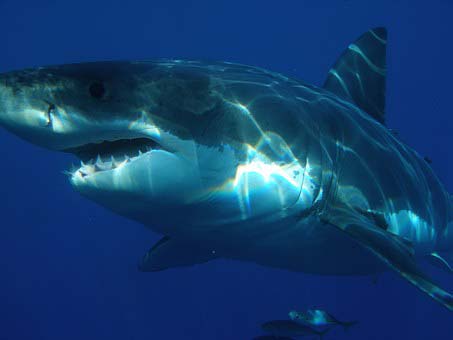
in South Africa. The Shark Park in the Aliwal Marine Protected Area allows
you to get up close and personal with Blacktip, Tiger and Dusky Sharks
without a cage impeding your one-on-one! Several underwater expedition
companies conduct cage less shark diving sessions for tourists - a not-to-be-missed
opportunity to see shark species such as Hammerheads, Lemon Sharks, and
Caribbean Reef Sharks.
Cape
Town and Mossel Bay are just some of the places where you can indulge in
this breathtaking experience.
Paragliding
If
a rendezvous with sharks is a little too 'out there' for you, why not try
paragliding? This exhilarating experience does not really require any 'experience'.
You will be flown under the supervision of expert pilots who will prepare
you for your flight. For a 40-minute flight from places such as Porterville
and Franschhoek, you can expect to pay around R950 (US$ 135). A 4-hour
cross country flight will cost around R1400 (US$ 200), not a bad deal for
some stunning aerial views of South Africa. For a little extra, your tour
operator will also arrange for a pick up and drop off at your hotel, with
water, sunscreen and refreshments thrown in. For about R200 (US$ 28), your
tour operator will also capture your views (and you in air!) through in-flight
digital photography equipment. A typical paragliding flight starts from
the mountains of Cape Town, takes you over areas like Table Mountain and
Camps Bay and ends with a smooth landing in South Africa's magnificent
vineyards and beaches.
Kitesurfing
In
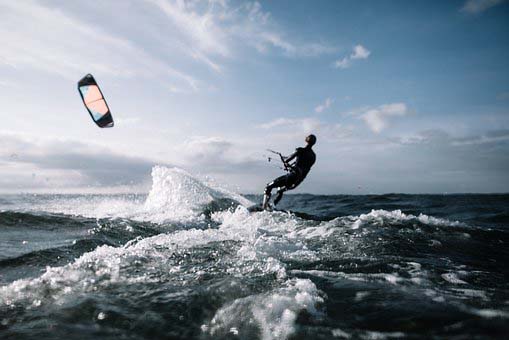
recent years, kitesurfing has taken off in a big way across the world;
South Africa's hot summers and endless beaches make for ideal kitesurfing
conditions. If you're nervous but still want to have a go at it, you're
in luck. Many adventure activity companies in South Africa have beachfront
kitesurfing schools that train beginners and provide all the necessary
equipment.
Kayaking
the Cape of Storms
Kayaking
is a fine way to explore the stunning natural beauty of the country. You
don't need prior experience; in fact anyone older than 10 years can indulge
in this sport. Under the guidance of expert professionals, kayaking in
South Africa is an exhilarating experience. Your chances of spotting whales
and penguins are pretty high!
4x4
Trails
4x4
trails in South Africa offer exciting opportunities to explore mountain
ranges (Nuweveld Mountain Range), passes and national parks (Richtersveld
National Park). It takes an average of four days to traverse South Africa's
4x4 trails which can range from 240 km to 750 km. A popular trail is the
Diamond Coast route from Dwarskersbos to Lambert's Bay and Hondeklipbaai,
terminating at Port Nolloth. The trail is moderately difficult to cover
but has a fascinating array of flora and fauna.
Skydiving
Want
a bigger adrenalin rush? Skydiving is just the thing for you! Sure enough,
South Africa has plenty of options on this front as well. An aircraft takes
you up to around 10,000 ft (giving you awesome views of the cities, bays
and peninsulas) above a drop zone from where you can jump out of the plane
with or without an instructor at a dizzying 120 mph. During the 45 seconds
or so until your parachute touches down, you can marvel at natural wonders
such as the West Coast, Robben Island, Cape Town and Table Mountain.
Storms
River
Storms
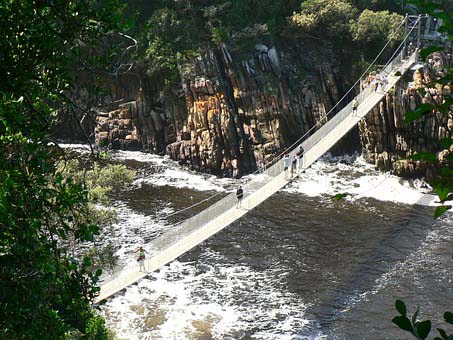
River, a small hamlet tucked away north of Plettenberg Bay, near Tsitsikamma
Forest is special in terms of the sheer number of adventure options it
offers. Take the Canopy Tour where you glide through the forest from tree
to tree, while being suspended from steel cables. Storms River is also
your one-stop destination for a plethora of activities such as hiking,
abseiling, bridge swing, and river rafting.
Other
activities
The
world's highest point for bungi jumping is located in Tsitsikamma Forest
Market, along the N2 Highway, about 40 km east of Plettenberg Bay. Strapped
into a full body harness and guided by bungi experts, you plunge down 200
m to the Bloukrans River.
Mountain
biking, always a popular adventure sport, is even more special in South
Africa with innumerable challenging trails to explore. Some noteworthy
trails are at Cape Peninsula National Park, Harkerville Forests, KwaZulu-Natal,
Port Elizabeth, and the De Hoop National Park, close to Swellendam.
Gigantic
waves and warm waters make for some unforgettable surfing in South Africa.
With over 100 surf-spots scattered throughout the country, you are spoilt
for choice! |




 Cape
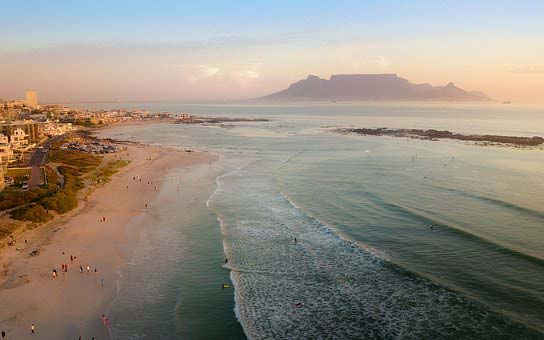
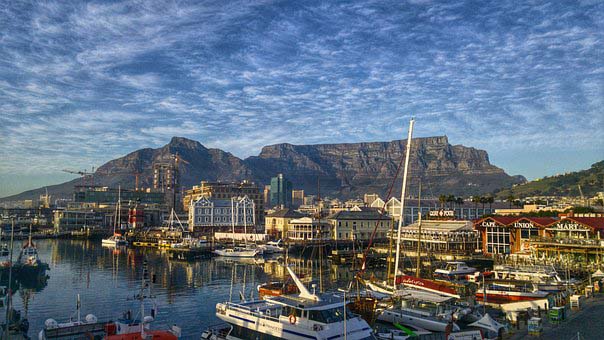
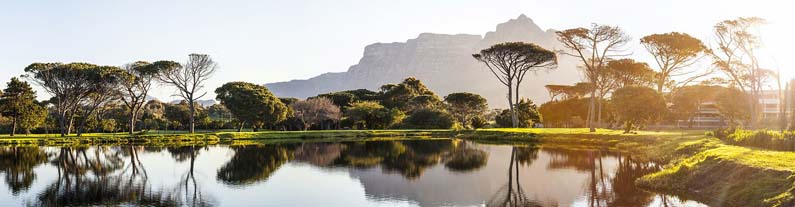
Town: See the wonder of Table Mountain from out in Table Bay
Cape
Town: See the wonder of Table Mountain from out in Table Bay