|
Unusual destinations
for a family holiday
The importance of travel
insurance
Interesting Tidbits About
Europe by Richard Monk
Playing such a large part in
the history of mankind, detailing key aspects of Europe is large task
indeed. Nonetheless, here we go.
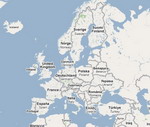
Geographically,
Europe is the western most section of the Eurasia continent.
Historically, however, it has always been considered a separate content
due primarily to political influence and a certain tinge of
arrogance.Under the myth of this theory, the eastern most boundary of the
European continent is the Ural Mountain in Russia with an imaginary line
extending south from there. There is no geological basis for this
boundary.
Europe
is the second smallest continent covering roughly 4 million square miles.
It has, however, the second largest human population with roughly 700
million people or a little over ten percent of all humans on the planet.
Interestingly, the population is no longer increasing with death and
birth rates a statistical match over the last 20 years.
The
origin of Europe as a name for the landmass is somewhat debated. Most
scholars accept that the name comes from Europa, a Phoenician Princess in
Greek mythology.
To say
there are an absolute ton of historical facts about Europe is just a
slight understatement. Much of modern western civilization is based on
the events that took place in Europe. Significant events include the
establishment and influence of the Roman Empire, the Roman Catholic
Church, the colonization of much of the known world by European powers,
the two World Wars, near constant conflicts between France and England,
the plague and so on. Europe has also been the home of some of the great
artist through times.
With a
vague eastern border, there is much controversy regarding whether
particular countries are part of Europe. The following countries are
generally accepted as such.
Some travel spots in Europe include:
Albania,
Andorra, Austria, Belarus, Belgium, Bosnia and Herzegovina, Bulgaria,
Croatia, Czech Republic, Denmark, Estonia, Finland, France, Germany,
Greece, Hungary, Iceland, Ireland, Italy, Kazakhstan, Latvia,
Liechtenstein, Lithuania, Luxembourg, Macedonia, Malta, Moldova, Monaco,
Netherlands, Norway, Poland, Portugal, Romania, Russia, San Marino,
Serbia and Montenegro, Slovakia, Slovenia, Spain, Sweden, Switzerland,
Turkey, Ukraine, United Kingdom and Vatican City.
Europe
can be summarized as relatively small landmass that has dominated much of
the modern world. Even with its colonization efforts ended, the economic
and military power of Europe is remarkable compared to larger continents
such as North America and Eastern Asia. With the creation of the European
Union, Europe should continue to be an influential force in the world for
many years to come.
Reykjavik
is one of the most beautiful cities in Europe, offering everything from
stunning natural landscapes to rich culture. As the world’s most
northerly capital city the city has a unique charm that tempts visitors
back to its snow covered mountain backdrop. Visitors can enjoy fine
dining, a lively nightlife and plenty of fantastic sightseeing
attractions during a holiday in Reykjavik; make sure you do not miss out
on this fantastic destination.
top
|