|
Search
this site

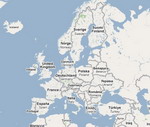
View
map of Europe
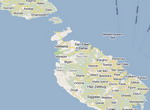
View
map of Malta
Copyright © All World
Vacation Station
|
 |
| Malta
Travel Reading:
Ancient
temples of Malta
Gozo
- A Different Haven of Ease and Quiet
Malta:
A Getaway For Both Young And Old
Malta
- Great For A Sailing Holiday
Malta:
Water And Light
Mdina,
"The Walled, Silent City of Ghosts"
Qawra
Travel Information
Sliema
Travel Information
The
Forts of Malta
Travel:
A beginners guide to Malta, Europe
Visit
Valletta To Walk The Many Streets
|
|
Malta:
Water And Light
Like
a kaleidoscope of different civilizations, Malta is a celebration of sea
and the sun. An invitation to visit these beautiful islands in the Mediterranean.
..
| |
Found in the heart of the
Mediterranean, 60 miles south of Sicily it is made up of Malta, the largest
island, Gozo and Comino. Like
a kaleidoscope of different civilizations, Malta has preserved all the
traces of its extraordinary past. From time immemorial, its beauty, honey-colored
stone and natural harbors had a reputation and influence.
Like a stone vessel at the
gates of Africa, Malta is a celebration of sea and sun. From its first
inhabitants, who built the colossal megalithic temples, to the terraced
fields, inherited from the Arabs, baroque churches, the Phoenicinas, Carthaginians,
Romans, Normans, Knights of St. John, whose Order created the first visionary
state, the French and the British, all left a historical legacy there. |
For the accident of geography
has placed Malta on the crossroad between East and West, between Europe
to the north and Africa to the south. The island stands like a statute
at the entrance of the East Mediterranean sea. Where for five thousand
years, it has participated in the rise and fall of empires, in the birth
and growth of religions, and holocaust of bloody wars. Soon the Mediterranean
basin begun to be dominated by more war like nations. Over the period of
a thousand years, the Greeks, Etruscans, Persians, and Carthaginians attempted
the domination of the Mediterranean and its lucrative trade routes. In
midst of its all, coming with each and single power to terms, like a pool
in a vast multinational game of chess, stood the small island of Malta.
FIVE THOUSAND YEARS OF
HISTORY
As the sun sets over the
blue Mediterranean, 5000 years of history leaves an unforgettable image.
Here tones have a soul. Some 5000 year ago, the island of Malta witnessed
the first traces of man. Dozen of mysterious megalithic temples were built
all over the islands. The huge stone complexes, which make the temples
of Ggantija, Hagar Qim, Mnajdra, Tarxien and Hypogeum at Hal Saflient,
thrill with imagination.
Originally, situated as a
land bridge linking Europe and Africa, the first settlers may have come
from Sicily with their traditional farming methods and their stone crafts.
Malta must have been a paradise island. To celebrate this, the islanders
dedicated their temples and status to the mother-goddess of fertility.
The mysterious disappearance of these highly artistic people in the Second
millennium was followed by waves of new settlers. Malta was open to a number
of new civilizations, particular from the East of the Mediterranean.
THE KNIGHTS OF ST. JOHN
During the Punic wars, the
Maltese islands were invaded by the Romans. Later on, the Phoenicians,
the Greek, the Carthaginians, all left their traces on the islands before
yielding them to the Arabs and then the Normans. But it was the Knights
of St. John who made them a player in the cultural area of 17th and 18th
century Europe.
THE ARABS
By the year 800 the Arab
Empire had expanded to encompass Persia, Syria, North Africa and most of
Spain including Sicily and Malta. For the Maltese, the 200 years of Arab
rule were a time of peace and stability. Agricultural methods were revolutionized
with new techniques of irrigation and the introduction of many new crops.
Among them cotton, lemon, olives and figs. |
|
The Arabs presence was beneficial
for Malta and for Europe. They brought new mathematics, art, sciences,
assimilated from all countries of their empire. Europe has barley recovered
from the dark ages from Gotts and Vandals. The Arab brought light in a
world of shadow.
VALLETTA A CITY OF BEAUTY
AND A SITE OF WORLD HERITAGE
The capital of Malta bears
the name of the French Grandmaster Jean de la Vallette who successfully
defended the islands against Ottoman attack. It was the first city built
according to detailed plans and its superb fortifications made it an impregnable
citadel. It is simultaneously a masterpiece of military architecture, a
cultural center, and a site of world heritage.
MDINA THE SILENT CITY
The old capital of Malta
- the city of Mdina - is a typical medieval town, situated in the center
of the island. Named "the silent city", it is a place of doors and walls,
not of people. It commands a magnificent view of the island.
THE ISLAND OF HONEY
The island main treasure
is its stone, a type of limestone which traps the light in its corners,
its panel and its curves. This golden stone, which earned Malta the name
of Melita "the island of honey", has inspired its architecture.
THE MALTESE
Malta loves to celebrate
and sparkle, religious feasts, carnivals, commemorative events, everything
is a good excuse for rejoicing. The Maltese have a flair for decoration.
The people of these small islands, can reflect on a rich and eventful history.
From this experience has grown an unique culture, and a people who despite
of their past - or perhaps because of it - remain cheerful and friendly
to all.
THE SIROCCO
The "sirocco" kneads your
breath and clays it. It is a strange wind the sirocco - one is neither
here not there. You are neither of the earth nor the sky. It gives you
that feeling. Lights of ships shimmer on the water of Malta Grand Harbor.
The harbor now seems no bigger than a toy. The flat seawater like silver,
and clouds rise like leaves. A place of light, of luminous valleys under
thunderous clouds. There is the smell of wet earth. The smell of forgiveness
drifting from each house with the smell of varnish and a peace that drifted
out to the empty beach.
MALTA IN BRIEF
Country name: Republic of
Malta Capital: Valletta Language: Maltese (official), English (official)
Archipelago with only three largest islands inhabited, Malta, Ghawdex or
Gozo and Kemmuna or Comino Population: 391,670. Maltese are descendants
of ancient Carthaginians, and Phoenicians Area: 326 sq km, coastline 140
km Climate: Mediterranean with mild, rainy winters and hot, dry summer
Natural resources: limestone, salt, arable land (38 percent) Environmental
issues: limited natural fresh water resources, increased desalination.
Economy: major resources are limestone, a favorable geographic location,
labor force. The economy is largely dependent on foreign trade, ship building
and repair, construction, manufacturing, tourism and services.
top
|
|
|
Malta:
A Getaway For Both Young And Old by Michael Johnson
Malta, which was once considered
a getaway for senior citizens, is attempting bring in a youthful demographic.
Recently, the Tourism Authority changed its efforts to attract a younger,
wealthier group of people. This renewed focus has paid off, as the number
of young people visiting the island has risen significantly in the first
few months of 2008. In 2007, the percentage of visitors under 24 years
old was 15 percent, while visitors between the ages of 25-44 represented
36 percent. Both demographics have increased their attendance this year,
with those under 24 up 53 percent and 25-44 year-olds increasing 32 percent.
The diverse population on
the island of Malta influences many facets of life and attracts a wide
variety of visitors. From the nightlife of Paceville to the view of the
sea, Malta has much to offer every age group.
| Even though the visitors
to Malta used to be retirement age, a great set of clubs, discos and bars
has developed over the years. This is one of the main ways in which the
Malta Tourism Authority has lured younger visitors to the island. A thriving,
variety of local establishments gives young visitors a taste of the diverse
culture that comprises the island.
Paceville is the nightlife
capital of Malta. Most of the venues of Paceville are located on four main
streets that spread out from the main square. These streets are Dragonara
Road, Wilga Street, St. Georges Road and St. Rita Steps. A police presence
is always nearby, keeping the denizens of the clubs safe and orderly. A
taxi rank is also located in the main square, for those who need a lift. |
|
Another way in which Malta
holidays are attracting a younger group of tourists is with the Isle of
MTV concerts, sponsored by the Tourism Authority. Now in its second year,
the Isle of MTV concerts brings in musical luminaries such as Enrique Iglesias,
N.E.R.D and the Kooks. Besides the promotional act of hosting the concert,
Malta also receives a lot of promotion throughout Europe on MTV. This gives
the island a possible viewership of 147 million households.
The Tourism Authority is
also organizing an MTV Music Week before the concert. This will include
a lot of local talent, which MTV plans on filming for broadcast. Many of
the Paceville clubs are involved in organizing the right music for the
MTV Music Week. The concert took place June 25, but will be broadcast in
September. Malta hopes that this will further draw the young and affluent
to their island paradise.
The island will still remain
one of the top destinations for retirees. Even with its focus on the nightlife
of the youth, it still has one of the most laid back atmospheres of the
Mediterranean.
The weather is more perfect
than you could imagine. Even though the pace is slower, every modern convenience
is still available at your fingertips. So, whether you're young or old,
this heavenly island can be your destination to get away for a good holiday.
top
About the Author - For Malta's
Luqa Airport and cheap Malta flight details visit yourmalta.com.
The holidays information includes accommodation with a range of Malta hotels,
including not only 4 and 5 star ones but cheap hotels too. |
|
