
|
Global Destinations: Europe & UK Destinations: |

3 Unusual and Unique
Destinations in Greece
Greece is full of history, beautiful landscapes, beaches and cities. However, this European country also has a stranger side, as we can see in the following unique places to visit in Greece. 1. Tourlitis Lighthouse,
Andros, Greece
Looking at images of
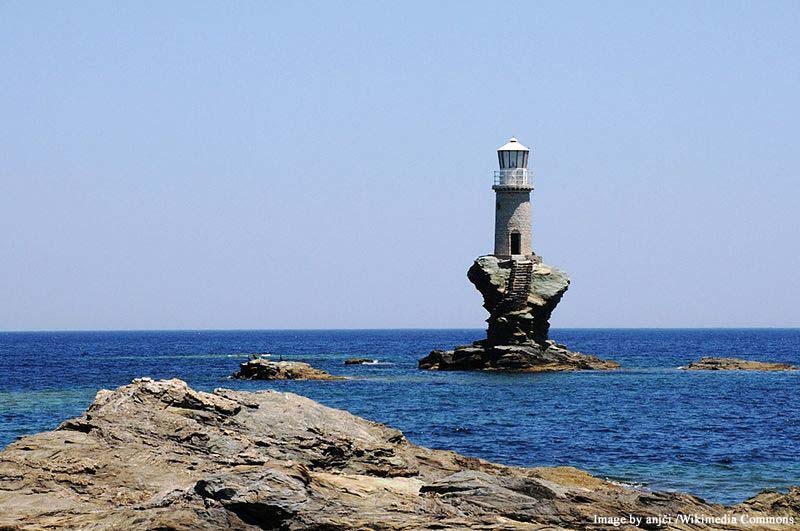
this fascinating lighthouse, it makes you wonder how they managed to build
it! The lighthouse is perched on a narrow spire of rock and looks like
something a wizard would choose as his home.
The Tourlitis Lighthouse stands off the coast of Andros and was first built in 1897. It turns out the stone column they chose to construct the lighthouse has been shaped by years of natural erosion. However, the original lighthouse didn’t last too long and saw its end in World War II. For a while, no one bothered to rebuild the lighthouse, but finally in the 1990s, an oil tycoon replaced the iconic building, dedicating it to his daughter. As the lighthouse isn’t easy to reach, it eventually became the first automated lighthouse in Greece and while you can’t actually visit, it is one of the most popular tourist attractions in the area and is definitely photogenic! 2. The Monasteries of
Meteora
Staying with
mind-boggling construction works, we now head to Meteora near to Thessaly in
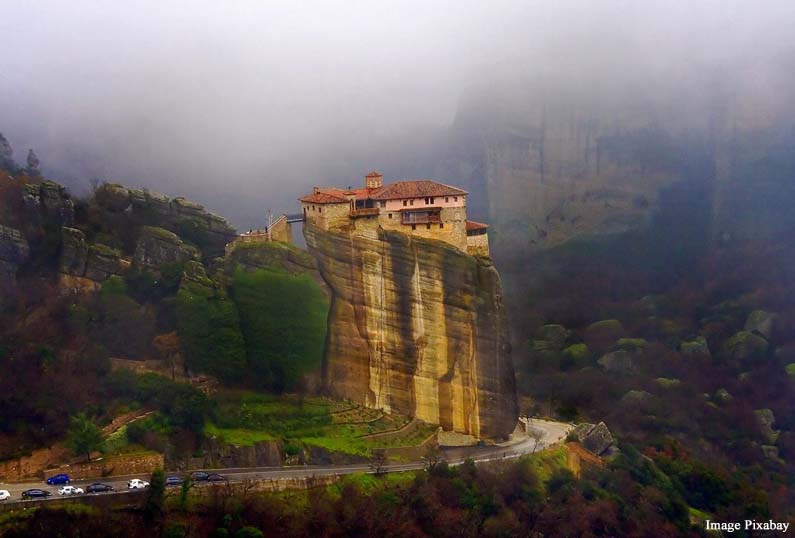
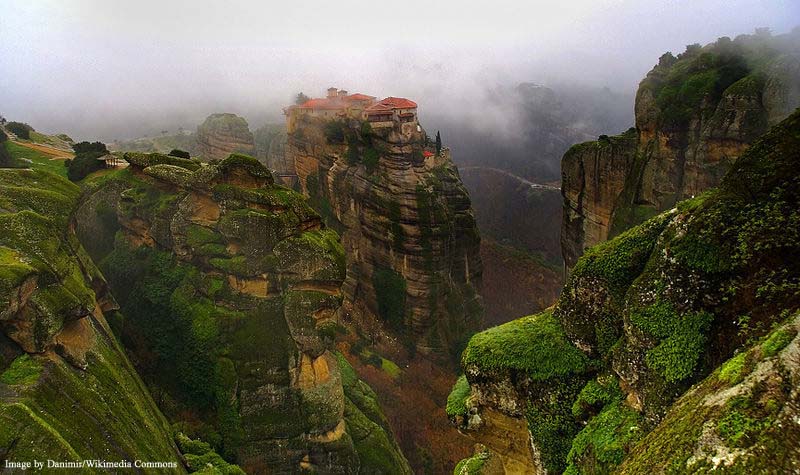
Greece. Here the Orthodox Church built a series of awe-inspiring monasteries,
perched on top of several gigantic sandstone pillars. The word “Meteora”
translates to “suspended rocks” or “suspended in the
air,” an appropriate description of these marvels, built on top of the
weather eroded sandstone rock towers.
Climbing up to these remarkable monasteries makes for the ideal selfies from your holiday in Greece to post on social media. Your friends will think you have headed somewhere truly magical, which is, of course, true! 3. The Prehistoric
Village of Akrotiri, Santorini
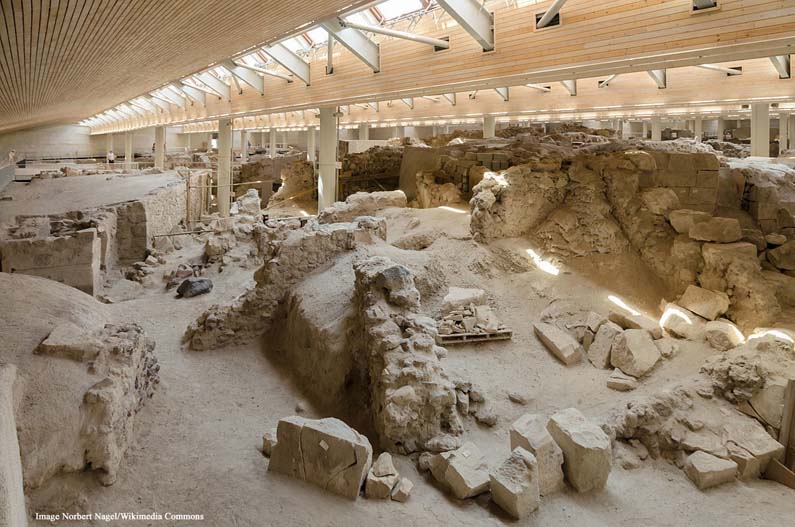
Akrotiri is a little
older than the previous two sites, as it was built by the Minoans on the
island of Santorini. What used to be a bustlng Minoan town is very
well-preserved, likely due to the eruption of the volcano on which the town
stood in the second millennium BC. Like Pompeii in Italy, the town was
covered by volcanic matter from Thera, burying the buildings and all their
contents. The
Minoan civilization lived in Crete and the surrounding islands from around
3600-1400 BC. Experts believe the town was highly sophisticated for its time,
with multi-storey buildings, elaborate draining systems and even indoor
toilets. This has led historians and scholars to believe Akrotiri could have
served as inspiration for Plato to write of the city of Atlantis. He had
written of a “great and wonderful empire” that was destroyed in one
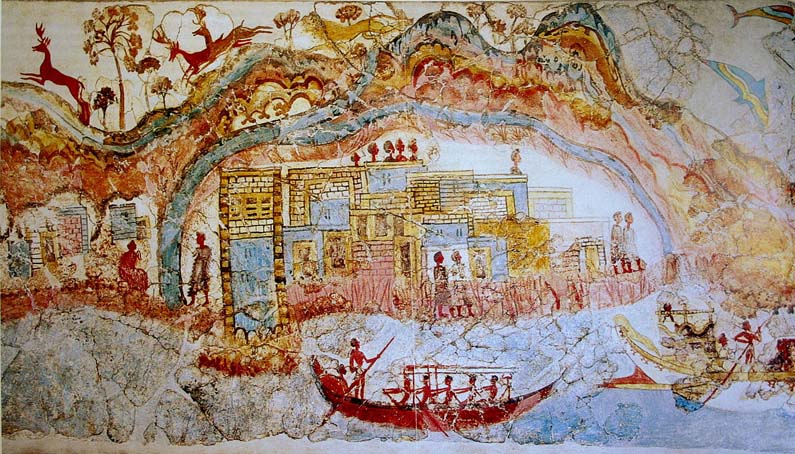
day by violent earthquakes and floods. This is easy to believe, when looking
at this remarkable fresco found in Akrotiri. |
|
|
Latest update: August 27, 2019