|
Search
this site

View
map of Europe
View
map of Italy
|
 |
Pompeii
by Brian Macdonald
Pompeii
Area Hotels / Pompeii
Photo Gallery
Pompeii happens to be one
of my favourite places and the following describes a visit not so long
ago.
Here is an ancient town where
the streets and the walls of the buildings are just as they were nearly
two thousand years ago. You can even see the graffiti left from the last
election written in large red letters on the walls together with the advertisements
for the various shops and businesses.
| The streets, or at least
those that have been excavated so far, stretch out in all directions as
they always have done. Two main roads heading north and south and another
two heading east to west, all with spectacular view of either the destructive
Vesuvius or the placid snow-covered Appenines. The roads are made of stone
and twelve inches or so below the level of the pavements so as to allow
surface water to drain away. Every now and again there are pedestrian crossings
made of stepping stones at the same level as the pavements so as to save
people from getting their feet wet in the rains. And it seems that the
Romans invented the cats eyes (for they used the same term) for every fifty
yards or so one slab of the kerb was made in white polished marble which
glinted in the moonlight at night.
Along these roads and streets
can be found the public fountains and these, or so we were told, still
work thanks to the skill of the Roman hydraulic engineers. Sadly, these
days the water runs through the system for a couple of hours only for the
visitors who come to see the ruins by night. One of the drinking fountains
we saw is worn down on either side of the spout from the people grasping
the edge to lean over and drink from the spurting water coming from a grinning
face not unlike the one in which some of us placed our hands just yesterday
in Rome. |

Buy
This Allposters.com
|
Along the sides of the pavements
could be seen the lead pipes carrying water to various parts of the city.
From these pipes can also be seen the smaller spurs carrying water straight
into some of the houses and shops. Those lead pipes over the years would
cause untold damage to the people drinking the water thus poisoned. Along
the roads can also still be seen the runnels and ruts made over the centuries
by Roman cart and chariot wheels slowly wearing down the stone. Since the
Romans had standard wheel gauges, these ruts are fairly uniform and stand
out sharply like embedded railway lines. That the Romans had one way streets
and also pedestrian precincts can also be seen as one walks around this
miraculous place. Large tombstone-like slabs stopped wheeled vehicles from
entering one sacred square and the direction of the ruts made by carts
indicated the Roman version of the one way street.

Buy
This Allposters.com
|
As one walks around, one
can still see the walls of the centrally-heated villas and houses that
ran along the streets and inside the remains of the brightly coloured wall
decorations the Romans were fond of. People, birds, fruit and food, mythological
scenes and the general way of Roman life are celebrated in these pictures
and paintings, some of them still spectacular in their execution. The mosaic
floors are still there to be admired. At the entrance of one house is the
famous mosaic of the chained, snarling dog with the inscription underneath,
CAVE CANUM, Beware of the Dog.
The statuary still exists
though almost all of it has now been removed to museums in Naples and replaced
with copies to guard against theft (in one villa we heard that 23 small
statues were stolen some years ago never to be seen again). These graced
the public places and the courtyards of the private villas in which the
pools and fountains are still occasionally put back into use. There is
a sort of open-air shed, fenced in and covered with corrugated iron that
houses some of the amphora and pots rescued from the ruins. In here also
are some of the statuary and pedimenta and columns from fallen temples
and other buildings and the bricks and tiles from more modest buildings.
It is a builders’ yard full of ancient building material. |
| Here also are some of the
casts made by the bodies of some of those who died from asphyxiation when
the volcano erupted. Stark, sad and shocking mementos of that tragic day.
One body lies stretched out, another curled up like a child, another with
hands clasped over the face as if to shield it against the hot falling
ashes. All were buried as the ash and cinders fell in remorselessly over
the town. Over time, the bodies rotted and later archaeologists, noticing
holes in the excavations, filled these holes with plaster of Paris to reveal
the sad outlines of those poor people.
In this shed was a life size
statue of Olivia, the Mother of Hercules. Made of a grey marble and now
missing the coloured eyes that would have been inserted in the sockets,
this wraithlike statue now gathers dust which is gathering thickly over
its head and shoulders and the folds of its toga.
But Pompeii was a living
place and, in a sense, it still lives for is it not true that people are
still treading the roads and pavements laid down over two thousand years
ago? Pompeii was a bustling and vibrant place, full of business folk and
traders all needing just the same things that we need these days; bread,
food, dentists, clothes and even brothels. Here are the bakeries with the
ovens and kneading counters still in usable condition together with the
machinery to grind the flour. |

Buy
This Allposters.com
|
Bread and pizza would have
come from these ovens piping hot (though the pizza would not have had a
tomato base until these were introduced from America). Here the fast food
shops dispensed portions of food to be eaten on the street; the forerunner
of modern such outlets.
Here also are the taverns
dispensing wines. Some of their storage jars remain stacked and though
empty as if still in readiness for the next batch of customers. The Roman
Empire standardised many things in life and memories of these remain today
(in, for example, the size of British house bricks or in our roads) and
even the local Weights & Measures Office can be seen along one road.
In this small office one could pour a measured liquid into sinks of varying
standard sizes to test whether one had been given short measure (you recovered
the liquids by placing your bowl underneath the sink and then pulling out
the plug). In this place one could also have tested the weight of something
you had bought or were suspicious of.

Buy
This Allposters.com
|
In and around the huge area
of Pompeii (and there is an even greater area waiting to be uncovered)
are the temples in which to worship, the amphitheatre in which to watch
the games, the theatre in which to see a play, the court in which to sue
one’s neighbour, the forum in which to declaim one’s views on a subject
or hear a politician defend a view, the bars in which to be jolly and the
baths in which to relax. Who cannot fail to get some appreciation of the
atmosphere of this unique place, nestling in a valley in the shadow of
the mountains and of the volcano that killed it? Perhaps it isn’t dead,
for the streets and buildings are still full of people who come to look
at this shadow of an ancient civilisation and a civilisation that seems
to have had pretty much all of the things we enjoy these days. Perhaps
the invisible shades of the people who lived in this town still jostle
in the streets along with the modern visitor. |
Perhaps they still sip their
wine in the bars, or enjoy a cool bath in the heat of midsummer or nibble
their pizzas as we stroll these seemingly empty streets. Is it possible
that the latest candidate for the Senate is not being heckled by a crowd
looking for some amusement as we walk through the forum or that the faithful
are not at their prayers or sacrificing as we stroll through a temple?
And who is to say that the men do not enjoy themselves in the brothel as
we pass silently through it and snigger at the paintings on the walls above
the cubicles?
It had rained earlier that
morning and many of the pools in the villas had water in them. Indeed,
in the House of the Faun, a stray dog strolled over while our guide was
explaining the place to us and, unconscious of the people around it, lapped
from the pool as dogs and cats must have done two thousand years ago. The
cart ruts in the stone streets also had water in them and puddles could
be seen in some parts of the road.
Just as might have been seen
two thousand years ago.
top
/ Pompeii Area Featured Hotels
About the author: Brian MacDonald |
|
|
|
POMPEII
AREA FEATURED HOTELS - CAMPANIA, ITALY
|
|
Search
for hotels in the Pompeii area, Italy
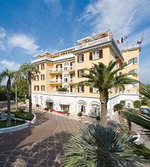 |
La
Medusa Hotel & Boutique Spa, Castellammare Di Sta (8 kms from Pompeii)

Grand Hotel La Medusa is
situated half-way between Naples and Sorrento, in the famous archaeological
area of Castellammare di Stabia, in the vicinity of the Thermal Baths and
8 kms from Pompeii. This superb 4 star hotel, surrounded by a strikingly
beautiful secular park and boasting breathtaking views of the hillside
and the Gulf of Naples, occupies a wonderfully romantic "fin de siecle"
villa, expertly restored so as to conserve all the characteristics of the
original 18th century building. The hotel has 50 rooms including
a luxurious suite with Jacuzzi shower, sauna and private solarium overlooking
the sea. Grand Hotel La Medusa also has a number of luxurious apartments
with bedroom, lounge and spacious bathroom equipped with both Jacuzzi shower
and sauna. |
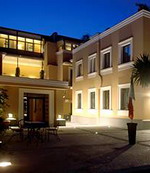 |
Hotel
Forum, Pompeii
The Hotel Forum is an elegant
4 star hotel strategically located in the historical centre of Pompei,
between the entrance to the excavations, which can be easily reached on
foot, and the Basilica. Personally run by the owners, it offers a
quiet and relaxing stay. It distinguishes itself for the warm hospitality
and the high quality service its staff can offer to either leisure or business
tourists. The hotel also has a large private car park, a breakfast
room with a garden, a bar, a TV room, an Internet Point, wireless connection,
a solarium and a modern equipped meeting room containing up to 45 people.
Our staff’s attentions and courtesy help to make your stay even more pleasant. |
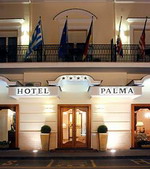 |
Hotel
Palma, Pompeii
Hotel Palma is a recently
refurbished property situated in the historic centre of Pompeii, a stone's
throw away from the city's most important Sanctuary and close to the entrance
of Pompeii's archaeological site. The hotel, run by a highly professional
and experienced team, features a fully air-conditioned environment with
elegant interiors and very comfortable and spacious guestrooms. Facilities
include a well-equipped meeting room and Internet point, a cosy bar and
TV lounge as well as a delightful citrus garden and splendid sun terrace.
The property features 30 finely decorated and soundproof guestrooms, each
featuring private bathroom. All rooms are equipped with adjustable
air conditioning, colour TV, direct dial telephone and Internet connection
(on request), mini bar and safety deposit box. |
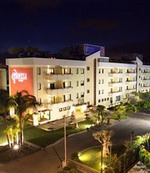 |
Pompei
Resort, Pompeii
Close to Cathedral of Pompei
and Pompeii Amphitheatre, this Pompei hotel is situated in the historical
district. Another nearby attraction is Teatro Grande. Dining options at
Pompei Resort include a restaurant and a bar/lounge. Room service is available
during limited hours. This 4.0-star property offers small meeting rooms
and audio-visual equipment. Complimentary high-speed (wired) Internet access
is available in public areas. This Pompei property has event space consisting
of banquet facilities and conference/meeting rooms. The property has an
area shuttle, which is complimentary. Wedding services and tour/ticket
assistance are available. Guest parking is complimentary. Additional property
amenities include multilingual staff and currency exchange. |
Continue
browsing Pompeii, Italy hotels
Top
|