|
Search
this site

View
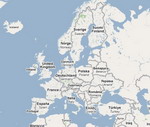
map of Europe
View
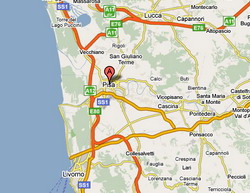
map of Italy

Buy
This Allposters.com
|
 |
|
Tuscany
Self-Catering Accommodation
You can start your tour of
this great city at the Baptistery (Battistero), which is the largest baptistery
in Italy. It dates back to the 12th century, making it a remarkable piece
of European history. Designed in its round shape by the famous Deotisalvi,
it has a rather large circumference of 348 feet.
| The construction of the
lower drum was done in Romanesque style and the gothic style upper part
was added almost a hundred years later. It is famous for its huge dome,
its carved front and the pulpit designed by the great Nicola Pisano.
Afterwards, you can visit
piazza dei Cavalieri. It was designed by Giorgio Vasari in the year 1560
and is one of the most important piazzas of Pisa. It is a curved open space
that leads up to the Church of Santo Stefano dei Cavalieri. This piazza
was the former seat of the Order of the Knights of St. Stephen (Ordine
dei Cavalieri di Santo Stefano), who were an organized group of religious
warriors who protected the city from the Turks. |

Buy
This Allposters.com
|
For those who enjoy being
close to nature, there is the Botanical Gardens (Orto Botanico di Pisa).
It was built sometime in the 1540s and is claimed to be the oldest botanical
gardens in all of Europe. Visitors can look forward to an amazing experience
viewing various fantastic species of plants from all over the world. It
has a very relaxed atmosphere and most visitors appreciate the calm and
quite. It is closed on Sundays and there is no admission fee.

Buy
This Allposters.com
|
Any visit to Pisa is incomplete
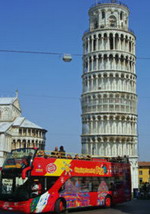
without a trip to the Leaning Tower (Torre Pendente) of Pisa. There are
many people every year who make a trip to Pisa just to see this tower.
It is actually the bell tower of Pisa Cathedral (Duomo di Pisa). Its sand
foundation caused it to lean over time and has now made it the famed monument
that it is. Climbing the stairs is a unique experience.
Italy is a country with so
much to explore and discover. Hiring a car in Italy may be an option worth
considering particularly if you plan on travelling about and taking in
some of the other wonderful locations within Italy such as Venice, Rome,
Milan and Naples.
There are lots of holiday
bargains to be had in Italy when it comes to flights, car hire, lodgings
and other holiday necessities. Companies are fighting tooth and nail for
your business. So if you fancy a value for money trip to Italy well now
may be the time to start searching. |
top
/ Pisa Featured Hotels / Pisa
Area Self-Catering Accommodation
Tuscany
Self-Catering Accommodation
About the Author: Take a
look at our resource sites at car
hire in Pisa and car hire at Venice Airport for more information
------------------------------------
10
Must See Attractions in Pisa by Claire Schembri
top
/ Pisa Featured Hotels / Pisa
Area Self-Catering Accommodation
Pisa is a historic town in
Tuscany, is now a vibrant young city with many renowned universities. Pisa
was also the home of the great mathematician Fibonacci and Galileo Galilei.
Amongst the main attractions in Pisa one finds:
-
The Leaning Tower of Pisa was
designed as a cathedral bell tower and to brag to Pisa's nemesis, the city
of Florence. Construction began in 1173 and when the builders discovered
the infamous tilt attributed to unstable soil under the tower, the builders
decided to continue with the project regardless. The cylindrical tower,
54 meters tall, has eight stories, six of them with open galleries.
-
The Duomo di Pisa is an imposing
white building dating back to 1063. The facade, constructed in the twelfth
century, has four tiers of open galleries housing statues and decorated
with marble inlay. The doors have bronze panels with bas-reliefs from the
sixteenth century. Inside there are a sixteenth century wood ceiling, several
important art works by Giambologna, Della Robbia, and other major artists,
and a magnificent marble pulpit.
-
Camposanto was the cemetery
for noble citizens of Pisa. The floor is covered with tombstones and there
are many funerary monuments. The portico held many medieval frescoes which
were damaged during WWII and removed for restoration.
|

Buy
This Allposters.com
|
-
Museo dell'Opera del Duomo,
at the eastern end of Piazza del Duomo, holds a huge collection of important
artworks including works of Nicola Pisano, Giovanni Pisano and the bronze
griffins from Syria captured by the Crusaders.
-
Museo Nazionale di San Matteo
is in the former Benedictine convent of San Matteo. The museum chronicles
the development of medieval Christian painting and sculpture in Europe
and include masterworks of Giovanni and Andrea Pisano, the Master of San
Martino, Simone Martini, Nino Pisano and Masaccio.

Buy
This Allposters.com
|
-
Battistero (Baptistry) large
round Romanesque dome with many sculptured decorations and a fine view
up top. Arabic-style pavement, pulpit by Nicola Pisano (father of Giovanni),
and fine octagonal font.
-
Palazzo della Carovana, the
main Scuola Normale Superiore building, with an elaborate façade,
by the important Italian Renaissance artist and architect Giorgio Vasari
- who is also said to be the first historian of art.
-
Palazzo dell'Orologio (Clock
Palace), a XIV century building that has replaced the Torre della Fame
(tower of hunger), where the Conte Ugolino della Gherardesca was imprisoned
and left to die of hunger with his sons, as cited in the Dante's Divina
Commedia
|
-
Piazza dei Cavalieri a small
town square with many historical buildings that hosted the political powers
of the city in the middle ages and Renaissance, but most of them are not
accessible to tourists, as they are now property of the University of Pisa
or Scuola Normale Superiore (a prestigious elitary school).
-
University botanical garden,
is the first university botanical garden of Europe, created by the will
of Cosimo de Medici in 1544. It is open weekday mornings and is free to
the public.
top
/ Pisa Featured Hotels / Pisa
Area Self-Catering Accommodation
About the Author: Claire
Schembri is an online marketing expert and has written articles on business
and travel. If you are looking for more information about travelling to
Pisa, you will find excellent information on our website ….. http://www.myitalytravelsite.com |
PISA
FEATURED HOTELS - TUSCANY, ITALY
|
|
Search
for hotels in Pisa, Tuscany
|
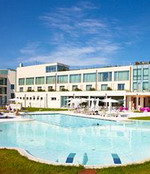
Abitalia
Tower Plaza Pisa
Situated near the airport,
this Pisa hotel is also close to Camposanto and Leaning Tower, as well
as Pisa Baptistry. Additional attractions include Cathedral of Pisa. Dining
options at Abitalia Tower Plaza include a restaurant and a bar/lounge.
Room service is available. A complimentary buffet breakfast is served daily.
Recreational amenities include a fitness facility and a steam room. This
5.0-star property offers small meeting rooms, limo/town car service, and
audio-visual equipment. Complimentary wireless Internet access is available
in public areas. Additional property amenities include a poolside bar,
multilingual staff, and complimentary newspapers in the lobby. The property
has designated areas for smoking. |
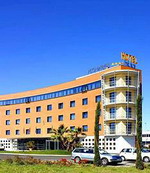 |
Accademia
Palace Hotel Pisa
This bed & breakfast
is located in Pisa. University of Pisa and Leaning Tower are area attractions.
Another nearby attraction is Orto Botanico di Pisa. Dining options at Accademia
Palace Hotel include a restaurant and a bar/lounge. Room service is available
during limited hours. Recreational amenities include an outdoor pool. This
4.0-star property has a business center and offers small meeting rooms
and business services. This Pisa property has event space consisting of
banquet facilities and conference/meeting rooms. The property offers an
airport shuttle (surcharge). Guest parking is complimentary. Additional
property amenities include a poolside bar, a coffee shop/café, and
laundry facilities. |
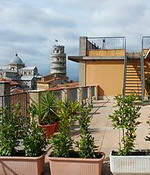 |
Grand
Hotel Duomo Pisa
Astonishing landscape and
contemporary accommodation provides an ideal setting for a vacation with
your family in the serene and relaxing atmosphere, combined with the rustic
elegance of the Pisa. The Grand Duomo hotel is ideally located in
the magnificent city of Pisa and is just hundred meters from the train
station and the San Rossore Private Clinic. The main university faculties,
the Sant'Anna and Normale high schools and many other highlights of the
city are also found close to the hotel. The Grand Hotel Duomo
has a large restaurant dedicated to those guests who would like to try
different types of Italian cuisine as well as many local dishes that Tuscan
cuisine has to offer. |
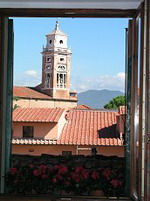 |
Hotel
Leonardo Pisa
Leonardo Hotel Pisa is a
building in the historical centre of the city, maintaining its ancient
characteristics. It is equipped with all modern comforts. The hotel is
a few minutes from all the major attractions and welcomes you for an unforgettable
vacation. The Leonardo Hotel Pisa is located in a calm area of the
city centre, just 50 metres from Piazza Dei Cavalieri and the River Arno.
Surrounded by lots of typical restaurants, the hotel is a mere 350 metres
from the world famous Leaning Tower. This property offers comfortable
guest rooms that are modern, well furnished and equipped with all standard
amenities. The hotel has a breakfast room that serves delicious breakfast
every morning. There are also plenty of restaurants around the area so
that you can truly enjoy a local dish. |
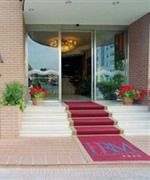 |
Hotel
Repubblica Marinara Pisa
Assuring comfortable accommodation
blended with quality service, this hotel makes you to enjoy all the privileges
for an unforgettable stay. Located on via Matteucci, the Repubblica
Marinara Hotel is 500 metres from the Palazzo dei Congressi and a kilometre
from the Pisa Galileo Galilei International Airport. This property
offers 55 well-appointed accommodation units that have been elegantly furnished
with an array of in-room amenities to ensure you a pleasurable stay.
Start off your day with a scrumptious breakfast served at the breakfast
room. Set in a pleasant atmosphere, the onsite restaurant serves delicious
a la carte, international, Mediterranean and Tuscan Cuisine for you to
feast on. After a tiring day, you can unwind at the cosy bar. |
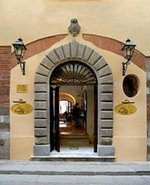
|
Relais
dell'Orologio Hotel Pisa
Visit Pisa and reside at
the Relais dell'Orologio Hotel, which guarantees to satisfy the most diverse
interests. Relais is situated near the most beautiful squares in
Pisa, the Piazza dei Miracoli and Piazza dei Cavalieri, in the heart of
the university campus. The hotel offers 25 bedrooms, which have all
the modern amenities required for a relaxing and comfortable stay.
Guests can savour the delicious food that is served at the on-site restaurant
and you can relax and have a have a few pegs of you favourite drink at
the bar.. |
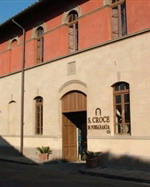 |
Santa
Croce In Fossabanda Hotel Pisa
Characterised by great hospitality
as well as world class service, Santa Croce In Fossabanda Hotel Pisa offers
an evocative and pleasant atmosphere to make your vacation an unforgettable
experience. Ideally located in the splendid city of Pisa, this excellent
property is an perfect starting point for visiting most of the famous places
in the surrounding area. The hotel has a great choice of spacious
guestrooms that are equipped with modern amenities as well as high standard
service to ensure you a pleasant stay in a comfortable environment.
There is no restaurant on-site, however you can visit the outstanding dining
establishments that are found close to the hotel. |
More
hotels in Pisa, Tuscany
Top
|